How Co-op Building Works in Build the Pyramid!
Build the Pyramid! is a 50-player shared build: server etiquette, why co-op is the mechanic not the flavor, and how groups finish pyramids faster.
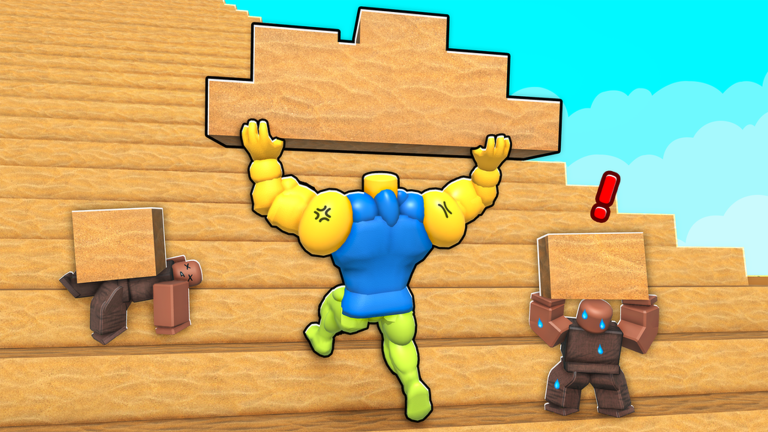
“Work together with everyone in the server” is one of the four official instructions in Build the Pyramid! — and unlike most games, where co-op is a mode you can ignore, here it is the mechanic itself. There is exactly one pyramid per server and up to 50 players carrying toward it. This page is about what that design produces: the unwritten rules, the shared incentives, and why the fastest way to get stronger is to help everyone else get stronger.
One pyramid means one shared fate
The structure completes when the server fills it — not when you personally place your hundredth block. That single design choice reframes everything: your blocks-per-minute matters, but it matters as a contribution to a group total. The completion bonus lands on everyone (the official description promises stronger characters from completed pyramids), so the rational play is the same as the polite one: keep blocks flowing. The mechanics of that flow are in how to build the pyramid.
The unwritten server etiquette
Carry, don’t hoard. The desert’s blocks belong to whoever moves them; parking on a spawn point helps nobody.
Place where the build needs it. A block placed where the structure is short pulls the completion moment closer for all 50 players. Placement is cheap; timing it well is free value.
Let the gym share the load. Nobody gains from forty players standing around one station. The training guide routines work at any station — spread out.
Stay for the ending. The capstone moment is the payoff and the payout: being present and carrying when the pyramid nears completion is how you collect the loop’s reward (see pyramid completion rewards).
Why helping is self-interested
Because the reward is shared, every tip that helps the server helps you:
- A faster server completes more pyramids per hour — and completions make you stronger.
- Players who redeem codes and train (see how to get stronger) carry more per trip, which moves the shared total faster.
- Even Coins and upgrades, covered in the upgrades overview, ultimately show up as more blocks on the one structure you all share.
Very few simulators make altruism mechanically profitable. This one does, which is why its servers tend to feel oddly pleasant for a game about hauling stone.
Playing together across devices
Co-op is device-agnostic: desktop, console, mobile and tablet players share the same servers, so a friend on a phone can join your session without compromise — the platform details are in Build the Pyramid! on console and mobile. If you are introducing someone to the game, the beginner’s guide is the single link to send them; if they ask what the game even is, what is Build the Pyramid!? answers it in one page.
The social loop, summarized
Carry together, complete together, get stronger together, repeat. The design removes the friction that usually kills co-op grinding — there is no competition for credit, just a shared counter and a capstone at the end of it. Learn the loop once in the beginner’s guide, keep your stats climbing, and the server takes care of the rest.
Related Articles
building
How to Build the Pyramid in Build the Pyramid!
How building works in Build the Pyramid!: where blocks spawn, how carrying works, placement on the shared pyramid, and how a server of 50 finishes a build together.
codes
How to Redeem Codes in Build the Pyramid!
Where the Codes panel is in Build the Pyramid!, how to type codes correctly, and the three reasons a valid code can still fail. Checked September 2026.
guides
Build the Pyramid! on Console, Mobile and Tablet
Build the Pyramid! plays on desktop, console, mobile and tablet — what carries across, what to expect per device, and cross-platform notes. Checked September 2026.
Was this helpful?
Thanks for the feedback!